
The cooling tower functions as a critical element in the circulating water supply circuit of thermal power and chemical industry facilities. Its energy efficiency has a direct impact on the efficiency of the main technological cycle. Existing maintenance strategies based on fixed time intervals or reactive troubleshooting demonstrate systemic inefficiency. This is manifested in the occurrence of excessive costs associated with untimely maintenance operations, or significant economic losses due to unplanned equipment downtime. An urgent engineering task is to develop tools for the transition to a predictive management model based on continuous monitoring and predictive analysis of the actual technical condition. For complex thermal engineering equipment, such as a cooling tower, the implementation of this approach requires the construction of its highly accurate dynamic model – a digital twin [1]. The purpose of this study is to describe the architectural principles, key mathematical models, and practical aspects of implementing a digital twin of a cooling tower for predicting the condition and optimizing the repair cycle.
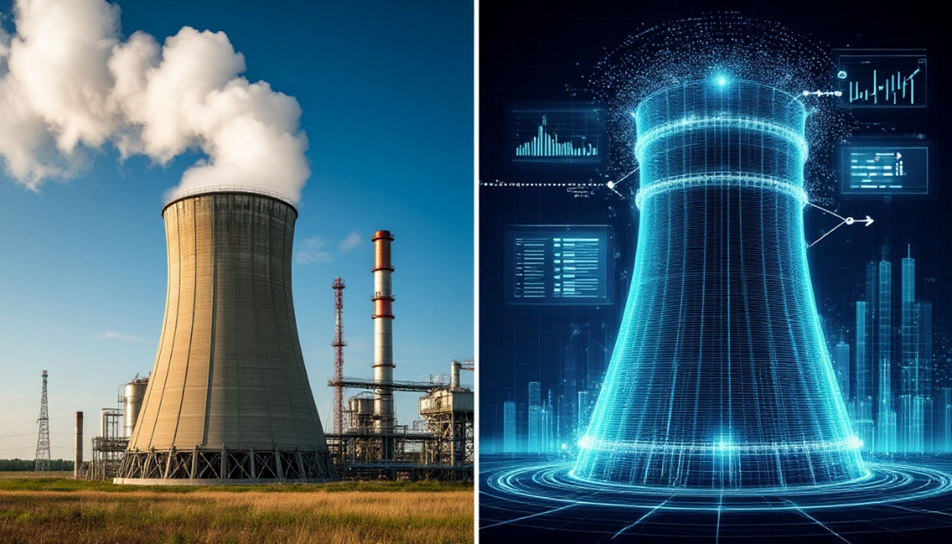
Figure 1. Block diagram of the digital twin architecture
The digital twin of a cooling tower is defined as an adaptive virtual model that is in a state of two-way communication with a physical object through a continuous stream of data and implements the functions of simulation, analysis and forecasting. The architecture of the system is formed by three interrelated layers. The physical layer includes a network of primary sensors installed on the cooling tower. Key parameters are recorded: inlet and outlet water temperatures, dry and wet thermometer temperatures, circulating water flow, vibration acceleration on the fan supports, pressure drop in the irrigation unit, as well as electrical parameters of the drive motors. The virtual layer is the computational core of the system, consisting of deterministic and predictive models. The deterministic heat-hydraulic model is used to calculate the theoretical (nominal) efficiency of a cooling tower under current environmental and load conditions [2]. Predictive degradation models use machine learning techniques to analyze historical trends. The fouling dynamics model correlates the increase in DP with water quality and operating time, predicting the moment when critical hydraulic resistance is reached. The mechanical wear model analyzes the time series and spectral composition of the vibration signal to estimate the remaining life of the bearing assemblies. The integration and visualization layer provides two-way communication: rapid calibration of models with up-to-date data and presentation of forecast results in the form of specialized dashboards, as well as integration with maintenance management systems to automate the formation of repair requests.
The predictive ability of the digital twin is provided by a set of mathematical models. The fouling efficiency and dynamics assessment model uses heat and material balance equations to calculate theoretical cooling capacity. The deviation of the calculated efficiency indicator from the actual one, determined by sensor data, serves as an integral indicator of the pollution level.
The fouling model, implemented by regression analysis methods or on the basis of recurrent neural networks, predicts the time to reach the threshold value of the DRC, at which flushing becomes technologically necessary and economically justified. The model for predicting mechanical failures of the fan group is based on the analysis of vibration diagnostics. Diagnostic features are identified from the vibration acceleration time series: RMS values, amplitudes at characteristic rotational frequencies and harmonics, as well as statistical indicators. To predict the RUL, the method of extrapolating the trend of the dominant diagnostic feature using adaptive filters or ensembles of regression models is used [3]. The threshold values of the features are determined based on the passport tolerances of the equipment and the analysis of historical data on failures.
The implementation of the digital twin is carried out according to an iterative scheme, starting with a pilot project on a single cooling tower. At the audit stage, the existing instrument base is evaluated, the missing sensors are retrofitted, and retrospective data is collected. The developed models are consistently calibrated and validated.
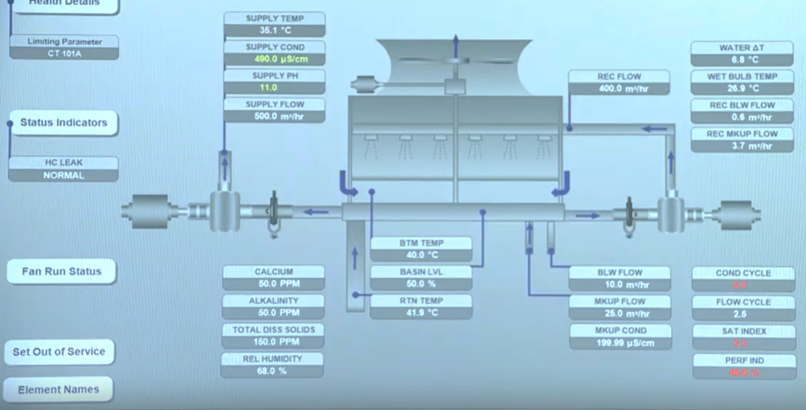
Figure 2. Diagram of a cooling tower with monitoring points
The key result is the formation of predictive scenarios. The flushing optimization algorithm does not provide the staff with a calendar schedule, but with a reasoned recommendation based on the forecast of achieving the DRC, which reduces the number of flushing cycles by 15-25% without reducing the efficiency of heat exchange.
The forecast of the mechanical condition generates warnings about the need to replace the bearing 200-400 hours before the predicted failure, transforming a potentially emergency stop into scheduled repairs. This reduces the cost of urgent spare parts purchases and minimizes downtime. The total economic effect of the implementation for a typical 50 MW cooling tower is manifested in a reduction in operating costs by 10-18% annually due to savings in water, reagents, electricity and repair costs, as well as an increase in equipment availability [4].
The presented methodology for creating a digital twin of a cooling tower demonstrates the effectiveness of using predictive analytics technologies to manage the lifecycle of critical industrial equipment. The integration of physical and mathematical models with operational data flows makes it possible to move from discrete, routine maintenance to continuous condition monitoring and sound predictive planning. Further development is associated with the deepening of models, the use of digital shadows for calibration in conditions of incomplete data, as well as the integration of the cooling tower twin into higher-level digital twins for comprehensive optimization of operating modes.
Библиографический список
1. Digital doubles of objects in solving control problems / V. A. Minaev, A.V. Mazin, K. B. Zdiruk, L. S. Kulikov // Radio industry. 2019. No. 3. pp. 68-78.2. Kudryashova, V. A. Digital twins and information technologies in industry / V. A. Kudryashova, A. Yu. Nazarov, M. A. Razakov // Electronic network political journal "Scientific Works of KubSTU". - 2023. – No. 4. – pp. 88-98.
3. Ryzhakov, V. V. digital twins of industrial facilities / V. V. Ryzhakov, O. E. Sizov // Problems of the electric power industry and telecommunications in the North of Russia : Proceedings of the IV International Scientific and Practical Conference, Surgut, April 20-21, 2023. Moscow: Znanie-M Publishing House, 2023, pp. 604-606.
4. Deimundt, A. S. The digital twin of an energy enterprise and its interaction with artificial intelligence modules / A. S. Deimundt // Youth and Science-2023 : Proceedings of the international scientific and practical conference, Petropavlovsk, April 12, 2023. Petropavlovsk: Non-profit Joint-Stock Company "North Kazakhstan University named after Manash Kozybayev", 2023, pp. 224-228.