
Russia’s fuel and energy complex remains the foundation of the national economy, ensuring the functioning of productive forces, generating a significant share of export earnings and determining the country’s geopolitical position. Under the conditions of sanctions pressure, global energy transition and technological competition, the fuel and energy complex faces the need not only to maintain current production volumes, but also to radically modernize its production and management processes through the introduction of advanced information and cyber technologies.
In recent years, the trend of spatial concentration of the population and economic activity has intensified in Russia. The unification of neighboring settlements into agglomerations — territorial formations with close industrial, infrastructural, socio-economic and labor ties — creates new conditions for the development of the fuel and energy sector. The key features of such zones are compactness, 1.5-hour accessibility, high population density, integrity of labor and real estate markets, as well as multicomponent and dynamic development [1].
Agglomerations act as powerful innovation hubs where scientific, educational and industrial resources are concentrated. This is where infrastructure is most effectively developed, logistics costs are reduced, production processes are optimized and resource efficiency is increased. Thanks to the «pendulum» migration and concentration of qualified personnel, agglomerations are becoming attractive for energy companies seeking to implement digital solutions and automate the processes of extraction, processing and transportation of energy resources.
Russia has one of the largest reserves of fossil fuels in the world. According to Rosnedra and the Ministry of Energy at the end of 2024, the structure of proven reserves in oil equivalent is as follows: coal — 68.2%, natural gas — 27.1%, oil — 7.4% [2]. The country ranks first in the world in terms of natural gas and coal reserves. In addition, Russia is among the top five in terms of uranium reserves: according to the IAEA estimates (2024) — 503 thousand tons, according to the State Balance Sheet of the Russian Federation — 331 thousand tons. These resources make it possible to develop both traditional and nuclear energy, including within the framework of a low-carbon strategy [3].
Unconventional energy resources are of particular importance. Russia has the world’s largest reserves of hard-to-recover oil (Bazhenovskaya and Domanik formations) and significant resources of shale gas [4]. However, their development is impossible without the use of high-tech solutions such as horizontal drilling, multi-stage hydraulic fracturing, as well as digital platforms for modeling geological processes in real time.
Figures 1-5 illustrate the territorial distribution of the main fuel and energy sector infrastructure facilities: from traditional oil and gas production (Fig. 1, 2) to projects for the development of unconventional resources (Fig. 3), the location of thermal power plants (Fig. 4) and the development of renewable energy (Fig. 5).
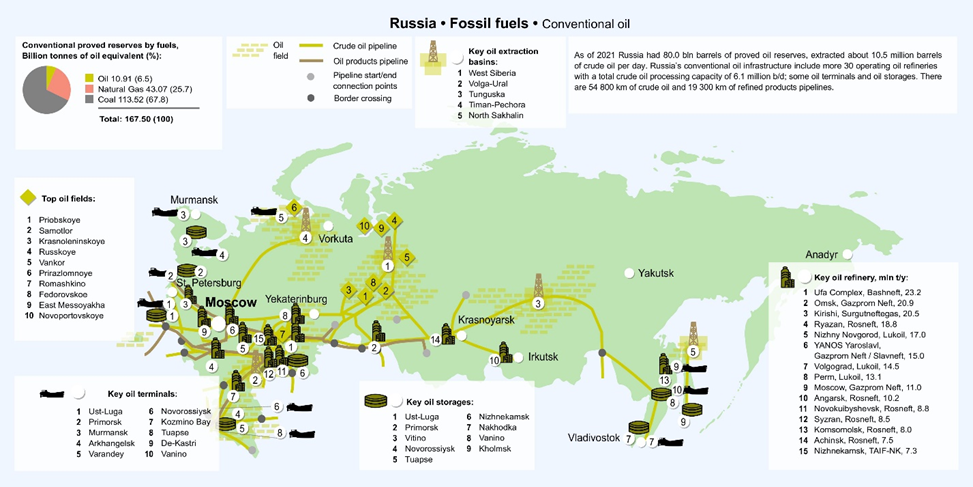
Figure 1. The main infrastructure facilities of the fossil fuel sector in Russia: conventional oil
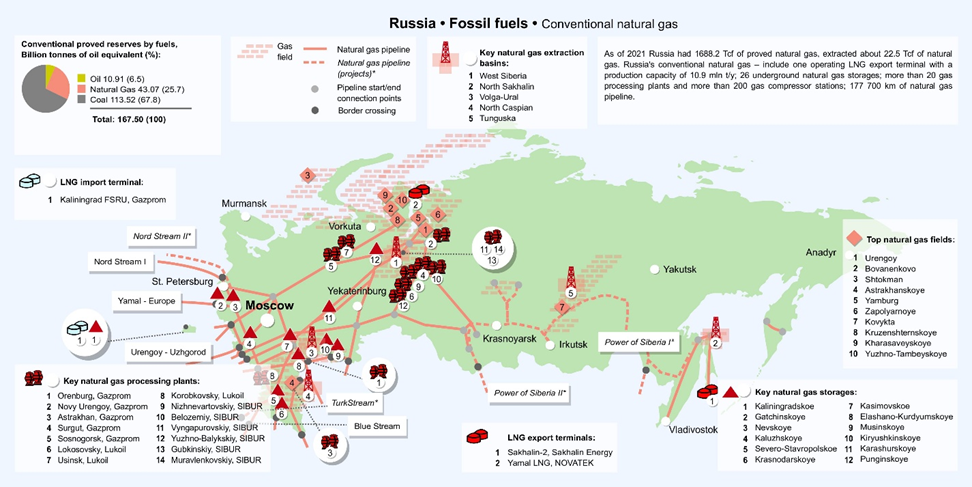
Figure 2. The main infrastructure facilities of the fossil fuel sector in Russia: natural gas
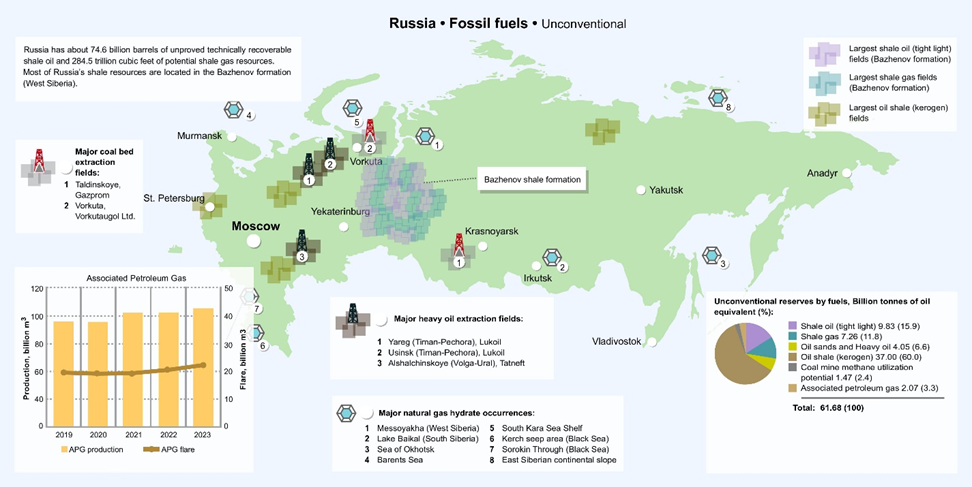
Figure 3. Main infrastructure facilities of the fossil fuel sector in Russia: unconventional resources
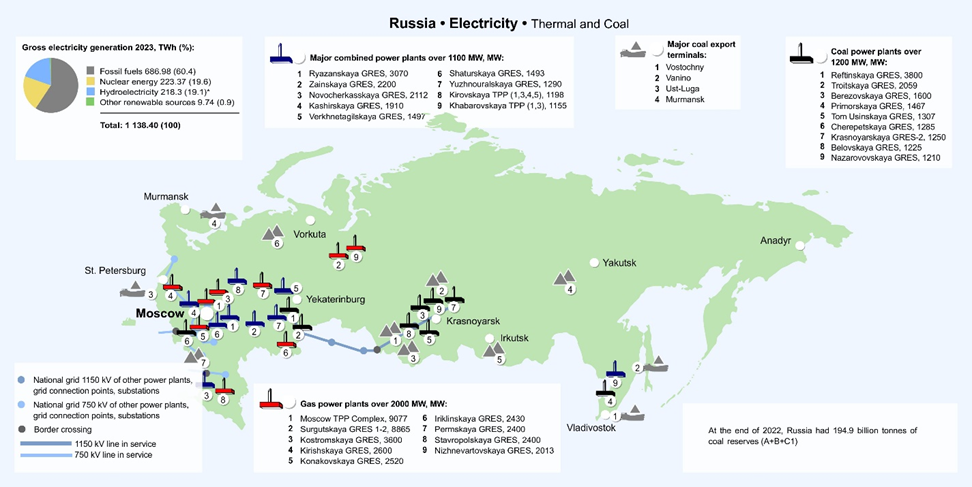
Figure 4. Main infrastructure facilities of the fossil fuel sector in Russia: thermal power plants
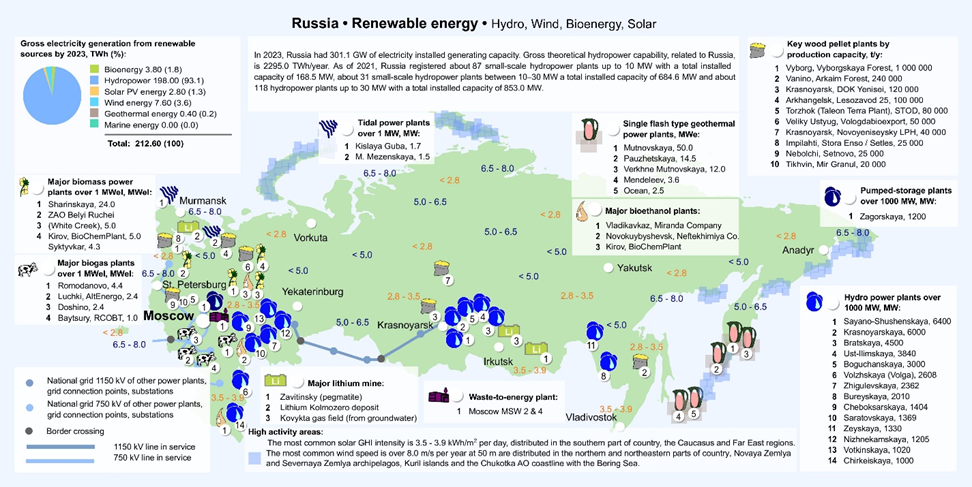
Figure 5. The main infrastructure facilities of the fossil fuel sector in Russia: renewable energy sources
Increasing energy efficiency is becoming a critical task of the modern fuel and energy complex. In 2024, the energy intensity of Russia’s GDP decreased by 3.2% compared to 2023, which brings the country closer to the goal of reducing by 11.1% by 2030 (relative to the level of 2019) [5]. This progress is achieved through the modernization of equipment, the introduction of intelligent control systems (Smart Grid), digital counterparts of industrial facilities and distributed generation.
Special attention is being paid to information and cyber technologies today. Digitalization of the fuel and energy sector includes not only process automation, but also the creation of secure, resilient control systems. Given that energy infrastructure is one of the objects of critical information infrastructure, cybersecurity issues come to the fore. Russian energy companies are actively developing their own cyber threat monitoring centers, implementing intrusion detection systems (IDS/IPS), and using artificial intelligence-based solutions to analyze anomalies in equipment and networks [6].
Innovation clusters are being created in large agglomerations such as Moscow, St. Petersburg, Novosibirsk, Yekaterinburg and Kazan, where energy engineers, IT specialists, scientists and engineers work together. It develops domestic software systems for well management, robotic complexes for pipeline diagnostics, as well as platforms for predicting emergency situations using machine learning. Digital independence in these areas is becoming not just a technological, but a strategic national security objective.
However, agglomeration development is also fraught with serious challenges. Population growth leads to an overload of transport and energy networks, a decrease in the quality of public and social services, an increase in emissions and an increase in social tension. The problem of fragmented governance is particularly acute: inter-municipal bodies often do not have real powers and resources to coordinate infrastructure development [4]. In addition, agglomerations «suck out» the population from small towns and villages, which leads to their gradual extinction, especially in Siberia and the Far East.
The State responds to these challenges through national projects «Housing and Urban environment», «Digital Economy» and «Ecology», as well as through the development of a legal framework in the field of spatial planning. Nevertheless, there is a growing need to adopt a federal law on agglomerations that would establish common principles for managing, financing and coordinating the development of these territories.
Thus, the future of the Russian fuel and energy complex is determined not so much by production volumes as by the ability to integrate science, high technologies and principles of sustainable development. Agglomerations, despite the associated risks, are becoming the engines of this transformation. Success will depend on how effectively technological breakthroughs in the energy sector can be combined with social and territorial justice, ensuring not only energy security, but also the quality of life in all corners of the country.
Библиографический список
1. Malinovskaya, I. N. Digital transformation of the fuel and energy complex of Russia: problems and prospects / I. N. Malinovskaya, V. I. Galiguzov, A. G. Vdovchenko // Managerial accounting. – 2025. – № 2. – pp. 119-126.2. Aminov, K. A. Digital transformation strategies using the example of fuel and energy complex companies / K. A. Aminov, E. E. Kolontaevskaya, E. B. Khomenko // Digital economy: prospects for development and improvement : Collection of scientific articles of the 5th International Scientific and Practical Conference, Kursk, May 29, 2025. Kursk: ZAO Universitetskaya Kniga, 2025, pp. 28-31
3. Kozlov, V. V. Digital transformation of the fuel and energy complex of Russia / V. V. Kozlov, V. K. Konovalova // Original research. – 2025. – Vol. 15, No. 2. – pp. 272-279.
4. Galiulina, A. R. Prospects and risks of digital transformation in the fuel and energy sector / A. R. Galiulina // Technological sovereignty and digital transformation : Proceedings of the International Scientific and technical conference, Kazan, April 03, 2025. Kazan: Kazan State Power Engineering University, 2025, pp. 92-94.
5. The impact of digital transformation processes on the development of the market of material and technical resources and equipment for the fuel and energy complex / I. M. Ishmaev, R. I. Malikov, R. I. Lukmanov, V. K. Gan // Science today: theory and practice : Collection of scientific articles of the XII International Scientific and Practical Conference, Ufa, March 21, 2024 of the year. Ufa: Ufa State Petroleum Technical University, 2024, pp. 17-23.
6. Krotova, M. A. Information security and digital transformation of enterprises of the fuel and energy complex of the Russian Federation / M. A. Krotova, A.D. Vinnikov // Actual issues of forming effective management systems for subjects of territorial reproductive complexes in the context of the need to ensure the economic sovereignty of the country : Proceedings of the International Scientific and Practical Conference, Krasnodar, January 19, 2024. Krasnodar: Krasnodar Central Research Institute - branch of the Federal State Budgetary Institution "REA" of the Ministry of Energy of the Russian Federation, 2024. pp. 359-364.