
The modern centralized heat supply system of the Russian Federation is faced with the need to ensure reliable and uninterrupted operation of hot water boilers, which are the basis of heat generating capacities. The operation of boilers under conditions of high load, variable climatic conditions and often outdated equipment leads to various types of failures, resulting in economic losses and a decrease in the quality of heat supply to consumers. Traditional maintenance methods based on time-based routine maintenance or actual equipment failures do not effectively prevent sudden breakdowns and optimize equipment life. In this regard, the transition to a predictive maintenance strategy based on predicting the condition of equipment using modern digital technologies is becoming particularly relevant. Machine learning is a powerful tool for implementing such a strategy, allowing you to analyze large amounts of sensor data and identify hidden patterns that precede equipment failures [1].
Hot water boilers are complex technical systems in which various types of failures can occur. The most common problems are corrosion of heat exchange surfaces, scale formation and deposits on the inner walls of pipes, overheating of individual components, clogging of burner devices, as well as failure of automation and control systems. These malfunctions develop gradually, manifesting themselves in changes in the operating parameters of the equipment long before the critical condition [2]. To detect such anomalies in a timely manner, constant monitoring of key parameters is necessary: water temperature at the boiler inlet/outlet, pressure in the circuit, coolant flow rate, flue gas composition, vibration characteristics of the housing and operating parameters of the burner devices [3]. Modern IoT monitoring systems allow collecting and transmitting data in real time, creating an information basis for the application of machine learning. (Fig. 1).
The use of machine learning algorithms for predictive maintenance of hot water boilers opens up new opportunities to improve the reliability of heat supply. Unlike the traditional approach, in which repairs are carried out according to a pre-set schedule regardless of the actual condition of the equipment, ML models allow you to determine the optimal moments for maintenance based on the analysis of current parameters and forecasting their dynamics. This approach not only reduces the risk of accidents, but also optimizes maintenance costs, avoiding both premature repairs and critical equipment wear.
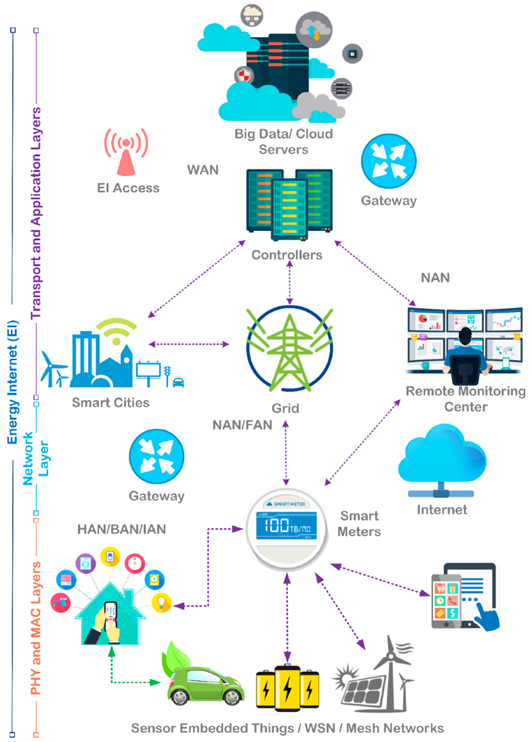
Figure 1. IoT-based predictive maintenance architecture
Modern ML algorithms for predictive maintenance can be classified according to several criteria. According to the type of tasks being solved, classification methods are distinguished (determining the condition of equipment as normal or abnormal), regression (predicting the remaining resource before failure) and anomaly detection (detecting deviations in operation without using labeled failure data). By architecture, algorithms are divided into traditional machine learning methods, deep learning, and hybrid approaches [4].
Ensemble algorithms, especially gradient boosting, occupy a special place among traditional methods. The XGBoost and LightGBM models have demonstrated high efficiency in predicting boiler equipment failures due to their ability to process heterogeneous data, noise tolerance, and the ability to assess the importance of individual features. These algorithms build a sequence of weak models (usually decision trees), each of which corrects the errors of the previous one, which makes it possible to achieve high prediction accuracy even if there are missing values in the data. Recurrent neural networks, especially LSTM (Long Short-Term Memory) and GRU (Gated Recurrent Units), are effective for analyzing time series characteristic of boiler operation parameters. These architectures are able to take into account long-term time dependencies in the data, which makes it possible to detect a gradual deterioration in the characteristics of the equipment long before the failure occurs. For example, LSTM networks can analyze trends in pressure drop changes in the boiler pipe system, which serves as an indicator of scale formation, or a change in exhaust gas temperature, indicating a decrease in heat exchange efficiency. Anomaly detection methods such as Isolation Forest and Autoencoders are particularly useful when historical failure data is scarce. Isolation Forest works on the principle of isolating anomalies in random trees, which makes it possible to efficiently identify rare events without the need for a large amount of labeled data. Autoencoders, in turn, are trained to reproduce the normal operating modes of the equipment, and a significant deviation between the input data and their recovery indicates an abnormal condition. This approach is especially valuable for detecting new, previously unknown types of failures.
Bayesian networks and hidden Markov models are used to predict the remaining service life, taking into account probabilistic transitions between equipment states. These methods make it possible not only to determine the current condition of the boiler, but also to assess the likelihood of a critical condition in the near future, which makes it possible to plan maintenance based on real needs [5]. For the practical implementation of ML solutions in the monitoring systems of hot water boilers, it is necessary to take into account the architectural features of the implementation. A typical predictive maintenance system includes the following components: a sensor level with temperature, pressure, flow sensors, and gas analyzers; a data acquisition and transmission level with edge computing for preprocessing; a server level with data storage and ML models; and a visualization and management level for boiler room personnel. The effectiveness of various ML approaches to predictive maintenance of hot water boilers can be assessed by several key parameters presented in Table 1.
Table 1
Comparative characteristics of ML algorithms for predictive maintenance of hot water boilers
| Algorithm | Prediction accuracy, % | Data requirements | Learning rate | Noise tolerance |
| Random Forest | 85–92 | Medium | Medium | High |
| XGBoost | 88–95 | Medium | High | High |
| LSTM | 90–96 | High | Low | Medium |
| Isolation Forest | 80–88 | Low | High | High |
| Autoencoders | 85–93 | High | Low | Medium |
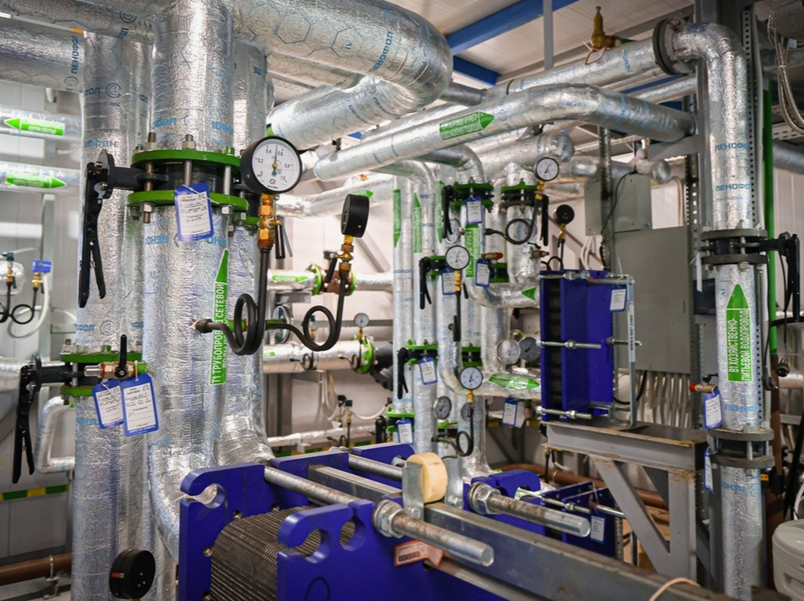
Figure 2. Automated boiler room
Some experience has already been gained in the practical application of ML solutions for predictive maintenance of hot water boilers. In one of the pilot projects implemented at a boiler house in Germany, an XGBoost-based system analyzed data from 50 sensors, including water temperature, pressure, flue gas composition, and pump energy consumption. The model successfully predicted the formation of scale in pipe systems 14-21 days before the critical condition, which allowed cleaning to be carried out as planned and to avoid an emergency stop. The economic effect amounted to 180 thousand euros per year due to lower repair costs, reduced downtime and increased energy efficiency [6].
The integration of machine learning into boiler control systems is a promising area of digital transformation of the thermal power industry. ML models make it possible to implement the principles of predictive maintenance, significantly increasing the reliability of equipment and reducing operating costs. Ensemble methods, especially XGBoost and LightGBM, as well as recurrent neural networks for time series analysis demonstrate the greatest efficiency. However, the widespread adoption of these technologies is hindered by insufficient digitalization of infrastructure, a shortage of personnel, and problems with interpretability of models. Further development of this area should be focused on creating hybrid models that combine the physical laws of boiler operation with adaptive machine learning algorithms. This will increase the confidence of the operating personnel in the forecasts and ensure the practical applicability of the solutions. In addition, it is necessary to modernize the measuring base in boiler houses with the installation of modern IoT sensors and the creation of unified standards for data collection and storage. The implementation of these measures will not only improve the reliability of heat supply, but also achieve significant economic benefits by optimizing maintenance costs and increasing the energy efficiency of equipment. In the context of global challenges in the field of energy and ecology, the transition to intelligent control systems for hot water boilers is becoming not just a technological trend, but a necessary condition for the sustainable development of thermal energy.
Further development of this area should be focused on creating hybrid models that combine the physical laws of boiler operation with adaptive machine learning algorithms. This will increase the confidence of the operating personnel in the forecasts and ensure the practical applicability of the solutions. In addition, it is necessary to modernize the measuring base in boiler houses with the installation of modern IoT sensors and the creation of unified standards for data collection and storage (Fig 2).
The implementation of these measures will not only improve the reliability of heat supply, but also achieve significant economic benefits by optimizing maintenance costs and increasing the energy efficiency of equipment. In the context of global challenges in the field of energy and ecology, the transition to intelligent control systems for hot water boilers is becoming not just a technological trend, but a necessary condition for the sustainable development of thermal energy.
Библиографический список
1. Цифровизация и новые функциональные требования, предъявляемые к тепловым электростанциям / С. Л. Горобченко, Д. А. Ковалев, Ю. И. Беленький [и др.] // Известия Тульского государственного университета. Технические науки. – 2023. – № 7. – С. 714-717.2. Гиматдинов, И. Р. Алгоритмы машинного обучения для прогнозирования отказов оборудования на основе данных телеметрии / И. Р. Гиматдинов // Энергетика и автоматизация в современном обществе : Материалы VIII Всероссийской научно-практической конференции обучающихся и преподавателей, Санкт-Петербург, 15 мая 2025 года. – Санкт-Петербург: Санкт-Петербургский государственный университет промышленных технологий и дизайна, 2025. – С. 57-62.
3. Лисовин, Г. Б. Цифровая трансформация ТЭК / Г. Б. Лисовин // Потенциал и вызовы развития возобновляемой энергетики : Сборник научных статей Всероссийской научно-практической конференции с международным участием, Невинномысск, 19–23 декабря 2022 года. – Ставрополь: Северо-Кавказский федеральный университет, 2023. – С. 76-82.
4. Жигалов, К. Ю. Аспекты применения машинного обучения для предиктивного анализа состояния сложного технологического оборудования на основе исторических данных и текущих показателей / К. Ю. Жигалов // Актуальные аспекты развития науки и общества в эпоху цифровой трансформации : Сборник материалов XVI Международной научно-практической конференции, Москва, 25 июля 2024 года. – Москва: Центр развития образования и науки, 2024. – С. 93-101.
5. Максименков, А. С. Применение метода нечеткой логики при управлении котельной / А. С. Максименков // Актуальные вопросы науки, общества и образования : сборник статей Международной научно-практической конференции. В 2 ч., Пенза, 05 декабря 2024 года. – Пенза: Наука и Просвещение, 2024. – С. 78-80.
6. Хисматуллин, А. С. Система управления водогрейным котлом с использованием нечеткой логики / А. С. Хисматуллин, Р. Ш. Ишмуратов, А. М. Хафизов // Международный технико-экономический журнал. – 2022. – № 2. – С. 77-82.